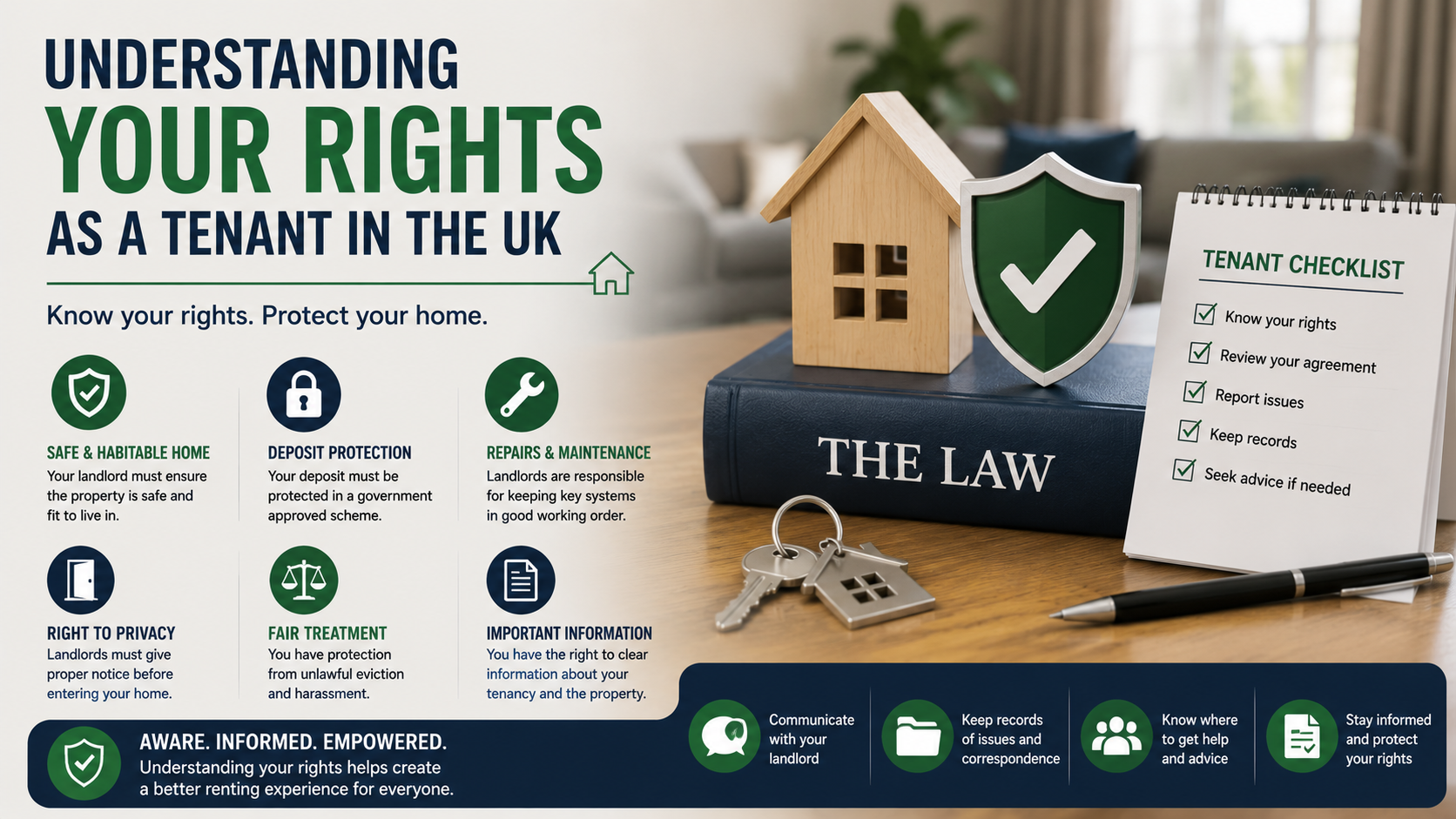
Renting a property comes with both responsibilities and legal protections. Unfortunately, many tenants are unaware of their rights until a problem arises. Whether you're renting a flat, house or shared accommodation, understanding your rights can help you avoid disputes, protect your finances and ensure you are treated fairly throughout your tenancy.
This guide outlines some of the key rights every tenant in the UK should know.
The Right to Live in a Safe Property
Landlords have a legal responsibility to provide accommodation that is safe and fit for human habitation.
This includes ensuring that:
- Gas appliances are safely maintained
- Electrical installations are safe
- Smoke alarms are installed and working
- Carbon monoxide alarms are fitted where required
- The property is free from serious hazards
If a landlord fails to address safety concerns, tenants may have grounds to contact their local authority for assistance.
Our article, How to Check a Rental Property Before Signing a Tenancy Agreement, offers a complete viewing checklist.
Before moving into a property, it is sensible to check previous tenant experiences to identify any recurring safety or maintenance issues.
The Right to Have Your Deposit Protected
If you rent under an assured shorthold tenancy in England or Wales, your landlord must place your deposit in an approved tenancy deposit protection scheme.
The landlord must also provide information about:
- Where the deposit is protected
- How the scheme works
- How the deposit will be returned at the end of the tenancy
Deposit protection helps ensure that deductions are handled fairly and reduces the likelihood of disputes when moving out.
The Right to Privacy
Although landlords own the property, tenants have the right to enjoy their home without unnecessary interference.
Generally, landlords must provide reasonable notice before entering the property, except in genuine emergencies such as:
- Gas leaks
- Flooding
- Fire-related incidents
If a landlord repeatedly enters without permission or fails to provide notice, this may constitute a breach of your rights.
The Right to Repairs and Maintenance
Landlords are responsible for maintaining certain aspects of the property throughout the tenancy.
These responsibilities typically include:
- Structural repairs
- Plumbing systems
- Heating and hot water
- Electrical wiring
- Sanitation facilities
Tenants should report problems as soon as they arise and keep records of all communication regarding repairs.
If maintenance issues are ignored for extended periods, tenants may be able to seek support through local authorities or dispute resolution services.
Report issues promptly, especially those related to Common Red Flags to Watch for During Property Viewings like damp and mould.
Protection Against Unfair Eviction
Landlords cannot simply ask tenants to leave without following the correct legal process.
In most cases, landlords must:
- Serve the appropriate notice
- Follow legal procedures
- Obtain a court order if necessary
Attempting to force tenants out through harassment, intimidation or changing locks without following legal procedures is unlawful.
Understanding your rights can help you recognise when a landlord's actions may be inappropriate or illegal.
The Right to Know Key Information
Tenants are entitled to important information about their tenancy and the property they occupy.
This may include:
- A written tenancy agreement
- Deposit protection details
- Energy Performance Certificate information
- Gas safety records
- Landlord contact information
Reviewing these documents carefully before signing can help prevent misunderstandings later.
Understanding Your Responsibilities
While tenants have important legal protections, they also have obligations.
Common responsibilities include:
- Paying rent on time
- Taking reasonable care of the property
- Reporting maintenance issues promptly
- Respecting neighbours
- Following the terms of the tenancy agreement
A successful tenancy usually depends on both landlords and tenants fulfilling their respective responsibilities.
Learn from Other Tenants
One of the most effective ways to prepare for a tenancy is to learn from people who have already lived in the property.
Tenant reviews can provide valuable insight into:
- Landlord responsiveness
- Maintenance standards
- Property condition
- Neighbourhood experiences
- Move-out processes
This information can help renters identify potential concerns before committing to a tenancy agreement.
Discover How Honest Rental Reviews Can Improve Standards Across the UK Rental Market.
Final Thoughts
Understanding your rights as a tenant is essential for protecting yourself and ensuring a positive renting experience. From deposit protection and property maintenance to privacy and eviction procedures, knowing what landlords can and cannot do allows you to make informed decisions throughout your tenancy.
In addition to understanding your legal rights, researching a property's history can be equally important. Reading tenant experiences on RentReview can help you gain a clearer picture of what to expect before signing an agreement. You can also explore the platform's mission through the About page and review the Terms & Conditions for further information about how the platform operates.
Being informed is one of the most effective ways to protect yourself and enjoy a smoother renting experience.